
How to Check Scranton Warrants
Scranton posts no official warrant portal and no police warrant list. A solid warrant check in Scranton pairs the Iowa public docket with a few focused phone calls. Before dialing, gather the exact first and last name, a middle name if you have one, any case or citation number, and the date of a missed hearing. Keep birth-date details private. Share them only when an office needs them to separate similar names.
- Search Iowa Courts Online by exact name, Greene County case ID, or citation number.
- Read public docket events for a missed appearance, warrant, return, bond, or later court action.
- Call the Greene County Clerk of District Court at 515-386-2516 about the filed case.
- Call Scranton Police or the sheriff through the LEC at 515-386-2136 for current enforcement and surrender instructions.
- Ask the Scranton City Clerk only when the notice concerns city code, parking, or a city-held payment record.
A blank search proves nothing. Scranton records can be restricted, sealed, newly filed, or held back until legal access rules are satisfied, so an online miss does not mean no warrant exists. The safest endpoint is confirmation from both the clerk and law enforcement.
Scranton Warrant Routing Needs Confirmation
Scranton's official pages name no current police warrant channel. The sheriff's published contract list leaves Scranton off it too. Neither gap settles the city's policing arrangement. Call Scranton City Hall at 712-652-3888 or the Greene County LEC at 515-386-2136 and ask who handles the specific matter. The official Scranton website is the verified municipal starting point.

That site offers local information but no active-warrant search and no municipal warrant line. A state case still belongs with the Greene County district clerk.
Scranton Police and Municipal Court
Scranton has no verifiable police warrant desk, no separate municipal criminal court, and no city warrant portal. City Hall can identify the current law-enforcement contact. A municipal infraction filed under Iowa law goes to the district clerk and an Iowa judicial officer, not to any stand-alone Scranton warrant court.
Local routing
Call City Hall at 712-652-3888 to identify who handles a city notice.
State-court route
Call the Greene County clerk at 515-386-2516 for a filed docket, hearing, or warrant order.
Scranton Warrant Questions at City Hall
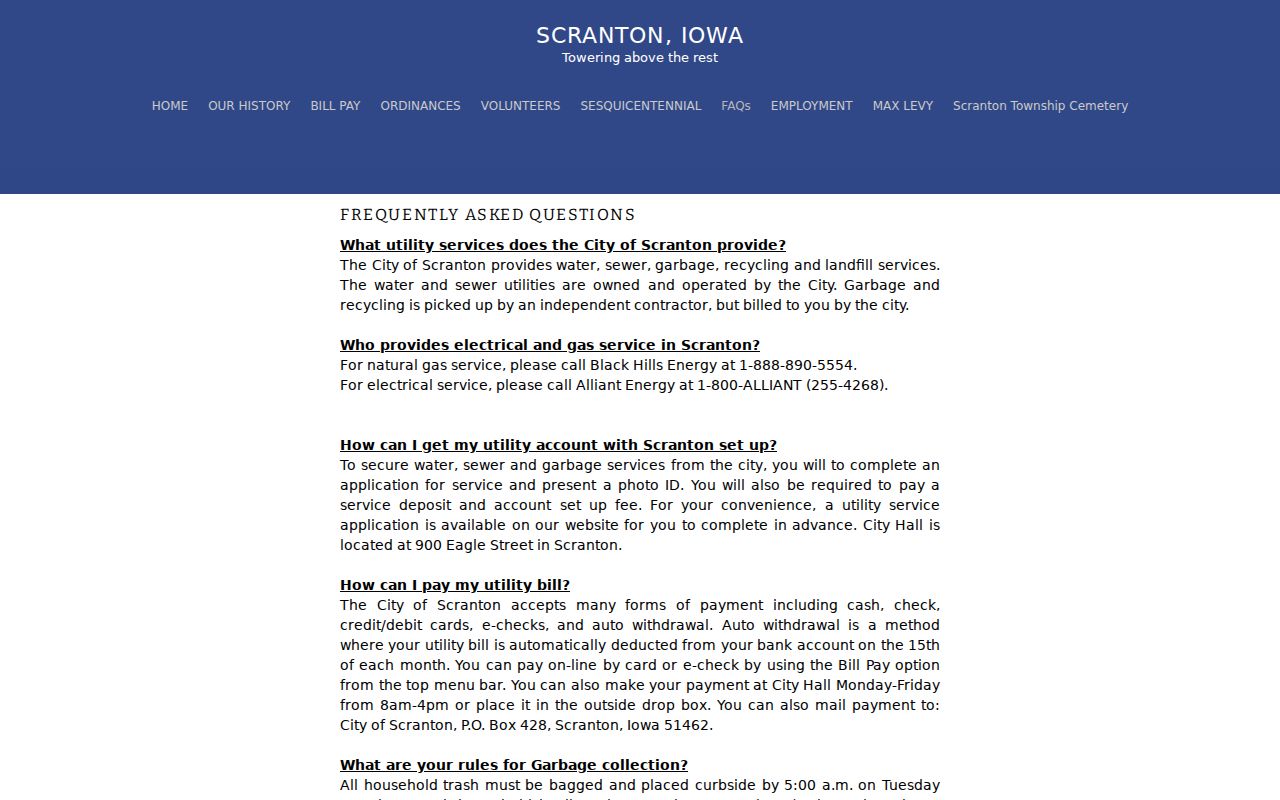
Scranton City Hall sits at 900 Eagle Street, with mail to P.O. Box 428, Scranton, Iowa 51462. Published hours run Monday through Friday, 8:00 a.m. to 4:00 p.m. The FAQ also lays out payment and drop-box options for city business. None of that means a court warrant can be paid or recalled there. The official Scranton FAQ supplies the verified address and hours.
Before using any payment channel, ask whether the record is still a Scranton city account or has become a district-court case.
Types of Scranton Warrants
Read the terms on a notice with care. Iowa separates arrest warrants from citations and search warrants. Statute says "arrest warrant for failure to appear," while "bench warrant" is the common Scranton court shorthand for some missed-appearance or noncompliance orders.
| Record type | How it arises | Scranton route |
|---|---|---|
| Arrest warrant | A magistrate finds probable cause from a complaint or affidavit. | District-court clerk and LEC |
| FTA or bench warrant | A person willfully misses a required court date or fails to comply. | Issuing court, then LEC |
| Citation | A written command to respond may issue instead of arrest. | Read the citation and confirm with the clerk |
| Search warrant | Authorizes a search of named property, places, persons, or things. | Not an arrest warrant for the searched person |
| Juvenile bench warrant | Arises in a juvenile proceeding. | Restricted; contact the proper court office |
Scranton Parking Is a Separate Fork
A Scranton parking record may stay with City Hall and never touch the Iowa court ePayment route. The state payment interface expressly excludes city parking fines. A municipal infraction is different. Iowa Code section 364.22 routes that citation to the district clerk for hearing by an Iowa judicial officer. Treat no payment screen as proof of warrant status. A debt can be payable while a separate failure-to-appear issue still needs court action. A Scranton parking balance can also exist with no arrest warrant behind it at all. Ask City Hall first whether it holds the record. Then ask the district clerk whether a court case was opened. Those two questions keep a Scranton city account and a judicial warrant from collapsing into one category.
What Scranton Warrant Records Show
A public docket match may show only part of the warrant material. Read the Scranton case identifier, court, charge, docket events, and later disposition together. Iowa's case ID is a structured 17-character identifier, but that format is not a unique Scranton warrant-number system.
| Case identifier | The court’s structured reference, such as Greene County case ID, not a city portal number. |
|---|---|
| Subject name | The filed name; confirm identity because similar names can appear. |
| Charge or offense | The allegation or statutory basis tied to the case. |
| Issuing authority | The magistrate or other Iowa district-court judicial officer. |
| Bond or court debt | Financial information may appear, but payment does not itself prove recall. |
| Status events | Issuance, return, appearance, recall, or disposition may be entered over time. |
Ask the clerk what the latest public entry means for a Scranton case. Only the court can decide whether its warrant has been recalled or quashed, which means formally canceled by judicial action.
Scranton Government Warrant Routing
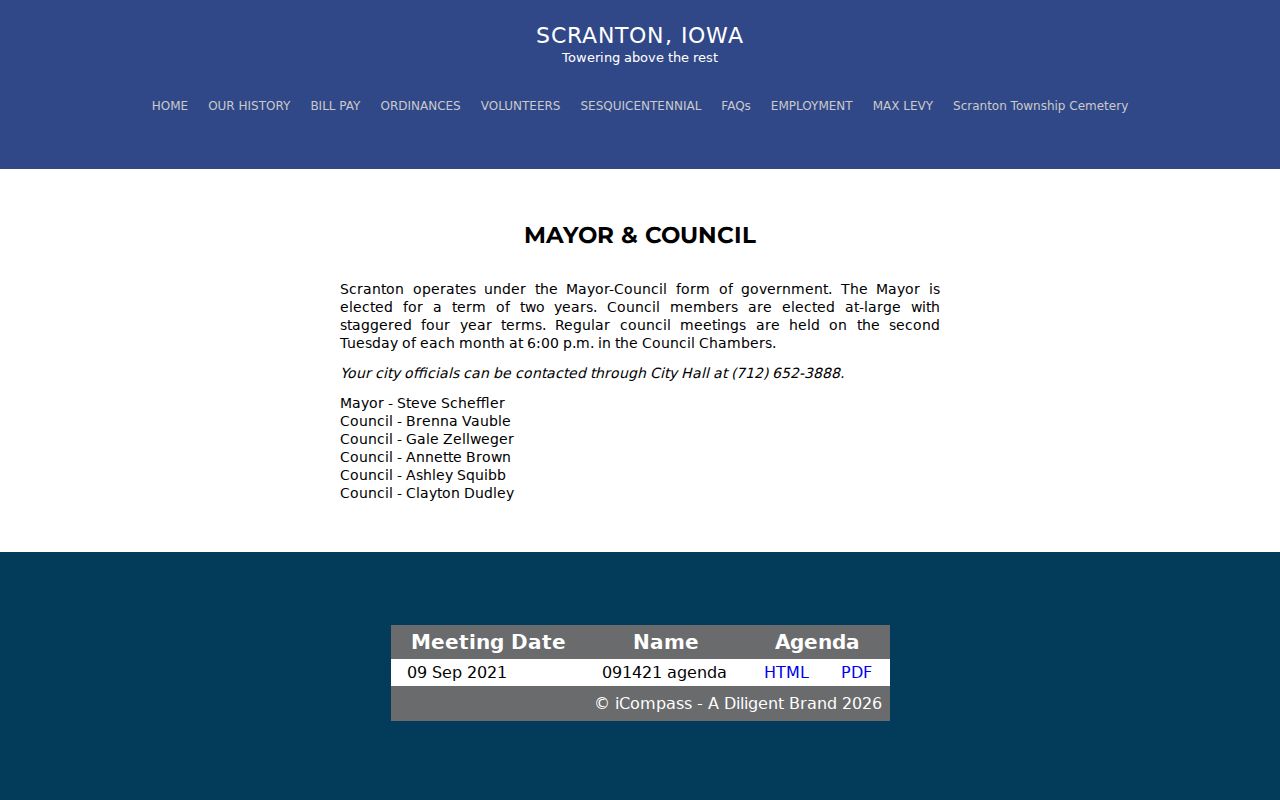
Scranton runs on a mayor-council government, and the council meets the second Tuesday of each month at 6:00 p.m. That structure points to City Hall for ordinances and local records. Council meetings, though, are not warrant-resolution sessions. The official mayor and council page confirms the City Hall telephone and government structure.
For current enforcement in Scranton, ask City Hall to name the proper agency. For a judicial record, go straight to the district clerk.
Scranton Warrants and Greene County
Scranton residents lean on local City Hall for routing, while state-court and LEC contacts sit in Jefferson. Those offices stay separate in law. Iowa judicial officers issue warrants. Peace officers currently responsible may execute them within lawful authority. Authorized agencies reach the secure Iowa On-line Warrants & Articles System, but the public cannot search that network.
Warrant flow: Scranton city notice or verified law-enforcement contact › Iowa District Court in Greene County › verified local agency or Greene County Sheriff › secure IOWA System
For the wider court and sheriff framework, see the Greene County warrant records overview. A Scranton resident should still confirm the case with the issuing clerk. Check enforcement status with the LEC.
Resolve a Scranton Warrant Safely
Confirm the identity and case number first. Then have the Scranton clerk read the docket. Ask whether it shows failure to appear, a pending hearing, court debt, a warrant, a return, or a recall. A recall means the court formally withdrew the warrant. Paying the balance, leaving a message, or appearing at a counter does not produce that result by itself. Call the LEC before any voluntary surrender in Scranton. Ask where to report, what identification is required, whether bond is set, and whether a judge must review the case. A lawyer can also ask the issuing court about a motion to recall or quash. Keep receipts and filed documents. Recheck the final Scranton docket after the court acts. Never send money because of an unexpected threat by phone, text, or email. Legitimate Iowa court payments go through the clerk, the secure state ePayment process, or the official court debt center.
Public Access to Scranton Warrants
Iowa Courts Online offers public case and docket information. It is not a live Scranton warrant roster. Applications, unexecuted materials, sealed records, juvenile cases, and protected investigations can remain unavailable. A focused public-record request may seek an identifiable public record, but no office can be forced to create a real-time warrant database.
Key Rules:
Iowa Code chapter 22 permits access to public records while preserving statutory confidential categories and reasonable fee rules.
Iowa Code chapter 804 governs arrest warrants, their contents, execution, return, and limits on access to some warrant material.
Iowa Code chapter 232 restricts access to juvenile court and social records.
Be precise. Name the court, case or citation number, date range, record type, and desired format for any Scranton record request, and ask for a fee estimate plus the legal basis for anything withheld.
Scranton Warrant Facts Need Current Sources
Scranton's city website links its ordinances. It posts no warrant page and no police channel. Ask City Hall whether an ordinance record is current and whether a citation stayed local or entered district court. An ordinance page cannot settle warrant status. The city home page also shows an older population figure. The official 2020 Census count of 511 controls here. Dated municipal web facts deserve a second look before anyone relies on them. Scranton sits along Highways 30 and 25 near the North Raccoon River Valley. That setting changes nothing about the court route. The Greene County clerk keeps the filed state docket. City Hall in Scranton can name the office that handles policing and pass along its instructions. Confirm any warrant or recall against the court record rather than treating a local referral as final.